
Tag: Nursing Students

  • Common Drug Interactions

    Common Drug Interactions

    Category: Pharmacology
    Tags: Drug Interactions, Pharmacology, Medicines, Drug Safety, Medication Safety, Medical Students, Nursing Students, Healthcare Education.

    Introduction

    Medicines are often prescribed together to treat multiple health conditions. While many medicines can be used safely in combination, some medicines can interact with each other and change their effects.

    A drug interaction occurs when one medicine, substance, or medical condition changes the effect of another medicine. Depending on the interaction, it may increase side effects, reduce treatment effectiveness, or cause potentially serious complications.

    Understanding common drug interactions is an important part of pharmacology and medication safety for medical, nursing, pharmacy, and other healthcare students.

    Important: This article is for educational purposes. The examples below are not a substitute for professional medication review. Patients should not stop or change prescribed medicines without consulting a qualified healthcare professional.


    What Is a Drug Interaction?

    A drug interaction occurs when the effect of one drug is changed by another substance.

    The interacting substance may be:

    • Another medicine
    • An over-the-counter medicine
    • A vitamin or supplement
    • An herbal product
    • Food or beverages
    • Alcohol
    • A recreational substance

    Interactions can also occur because of a patient’s medical condition.


    Why Do Drug Interactions Matter?

    Drug interactions can cause different outcomes.

    An interaction may:

    • Increase the effect of a medicine
    • Reduce the effect of a medicine
    • Increase toxicity
    • Increase the risk of bleeding
    • Alter blood pressure
    • Change blood glucose
    • Affect heart rhythm
    • Change drug concentrations in the body

    Some interactions are minor, while others can be clinically significant.


    Types of Drug Interactions

    Drug interactions can broadly be divided into several categories.

    1. Drug-Drug Interactions

    This occurs when one medicine affects another medicine.

    For example, two medicines may have similar effects and increase the risk of a particular adverse effect.


    2. Drug-Food Interactions

    Food or beverages can sometimes affect the absorption or metabolism of medicines.

    Certain foods may increase or decrease drug concentrations.


    3. Drug-Alcohol Interactions

    Alcohol can interact with various medicines and may increase effects such as:

    • Drowsiness
    • Dizziness
    • Impaired coordination
    • Low blood pressure
    • Liver-related toxicity

    The effect depends on the medicine and the amount of alcohol consumed.


    4. Drug-Supplement Interactions

    Vitamins, herbal products, and other supplements can interact with medicines.

    Natural products are not automatically free from interaction risks.

    Patients should tell healthcare professionals about all supplements they are taking.


    Pharmacokinetic Interactions

    Pharmacokinetic interactions affect what happens to a drug in the body.

    They can affect:

    • Absorption
    • Distribution
    • Metabolism
    • Excretion

    Remember:

    Pharmacokinetics = What the body does to the drug.


    Pharmacodynamic Interactions

    Pharmacodynamic interactions occur when substances affect similar physiological pathways or effects.

    For example, two medicines that both cause sedation may produce greater sedation when taken together.

    Remember:

    Pharmacodynamics = What the drug does to the body.


    Common Drug Interaction Examples

    1. Warfarin and Other Medicines

    Warfarin is an anticoagulant used to reduce the risk of certain blood clots.

    It has many potential interactions with other medicines and substances.

    Some interactions can increase the risk of bleeding, while others can reduce anticoagulant effectiveness.

    Patients taking warfarin may require regular monitoring and should inform healthcare professionals before starting or stopping other medicines or supplements.


    2. NSAIDs and Anticoagulants

    NSAIDs such as ibuprofen can affect platelet function and the gastrointestinal tract.

    When combined with anticoagulants or certain other medicines that increase bleeding risk, the overall risk of bleeding may increase.

    This combination should therefore be used only when clinically appropriate and under professional guidance.


    3. Opioids and Other Sedatives

    Opioid medicines can cause central nervous system depression.

    Combining opioids with other sedating substances, including certain sedative medicines or alcohol, can increase:

    • Drowsiness
    • Respiratory depression
    • Loss of consciousness
    • Risk of overdose

    This is an important medication-safety concern.


    4. Multiple Medicines That Lower Blood Pressure

    Some medicines can lower blood pressure.

    Using several such medicines together may sometimes cause excessive blood pressure reduction.

    Possible symptoms include:

    • Dizziness
    • Weakness
    • Fainting
    • Light-headedness

    Healthcare professionals may need to monitor blood pressure and adjust treatment when appropriate.


    5. Medicines That Lower Blood Glucose

    Several medicines can reduce blood glucose.

    When multiple glucose-lowering medicines are used together, there may be an increased risk of hypoglycemia, depending on the medicines involved.

    Symptoms of low blood glucose can include:

    • Sweating
    • Shaking
    • Hunger
    • Confusion
    • Dizziness
    • Weakness

    Patients using diabetes medicines should understand how to recognize and respond to hypoglycemia according to their healthcare professional’s instructions.


    6. Certain Antibiotics and Other Medicines

    Some antibiotics can interact with other medicines by affecting drug metabolism, absorption, or physiological effects.

    Depending on the combination, an interaction may affect:

    • Heart rhythm
    • Drug concentrations
    • Bleeding risk
    • Kidney function
    • Effectiveness of another medicine

    This is why the complete medication list should be reviewed before starting a new medicine.


    7. Statins and Certain Medicines

    Statins are commonly used to reduce cholesterol.

    Some medicines can increase concentrations of particular statins, potentially increasing the risk of muscle-related adverse effects.

    Healthcare professionals consider the specific statin, dose, interacting medicine, and patient factors when assessing the risk.


    8. Digoxin and Other Medicines

    Digoxin has a relatively narrow therapeutic range.

    Some medicines can alter digoxin concentrations or its effects.

    Toxicity can be serious and may involve:

    • Nausea
    • Vomiting
    • Confusion
    • Visual disturbances
    • Abnormal heart rhythms

    Patients taking digoxin may require appropriate monitoring.


    9. Methotrexate and Certain Medicines

    Methotrexate can interact with several medicines.

    The clinical significance depends on the dose, indication, kidney function, and interacting medicine.

    Because methotrexate can cause serious toxicity, medication combinations should be carefully reviewed by healthcare professionals.


    10. Antidepressants and Other Medicines

    Some antidepressants can interact with other medicines that affect serotonin.

    In certain combinations, excessive serotonin activity can lead to serotonin syndrome.

    Possible symptoms include:

    • Agitation
    • Sweating
    • Tremor
    • Increased heart rate
    • Muscle rigidity
    • Confusion
    • Fever

    Suspected serious reactions require urgent medical evaluation.


    Food and Drug Interactions

    Drug interactions are not limited to medicines.

    Certain foods can affect medication activity.

    Grapefruit

    Grapefruit and grapefruit juice can interact with some medicines by affecting enzymes and transport proteins involved in drug metabolism.

    The effect depends on the specific medicine.

    Patients should check whether grapefruit is appropriate with their medication rather than assuming it is safe for every medicine.


    Alcohol and Medicines

    Alcohol can interact with many medicines.

    It may increase:

    • Drowsiness
    • Dizziness
    • Impaired coordination
    • Low blood pressure
    • Risk of accidents

    Some medicines also have specific interactions with alcohol that can cause additional adverse effects.

    Patients should check the medication information or ask a healthcare professional if alcohol is safe with a particular medicine.


    Herbal and Supplement Interactions

    Patients sometimes forget to mention supplements when providing their medication history.

    Examples of products that can interact with medicines include:

    • St. John’s wort
    • Ginkgo
    • Garlic supplements
    • Ginseng
    • Certain mineral supplements

    One well-known example is St. John’s wort, which can affect the metabolism or effectiveness of several medicines.

    Always include supplements and herbal products when discussing medications with a healthcare professional.


    Drug-Disease Interactions

    Sometimes the interaction is not between two medicines.

    A medical condition itself can affect how a medicine works or whether it is safe.

    Examples include:

    • Kidney disease affecting drug elimination
    • Liver disease affecting drug metabolism
    • Asthma affecting suitability of certain medicines
    • Heart conditions affecting medicines that influence heart rhythm
    • Ulcer disease affecting medicines that increase gastrointestinal bleeding risk

    This is known as a drug-disease interaction.


    Factors That Increase Interaction Risk

    Certain patients may have a higher risk of clinically significant drug interactions.

    Important factors include:

    • Taking multiple medicines
    • Older age
    • Kidney impairment
    • Liver impairment
    • Multiple medical conditions
    • Complex treatment regimens
    • Use of supplements
    • Frequent changes in medication

    The more medicines a patient takes, the more important medication reconciliation becomes.


    How Healthcare Professionals Prevent Drug Interactions

    Medication safety involves several steps.

    1. Take a Complete Medication History

    Ask about:

    • Prescription medicines
    • Over-the-counter medicines
    • Supplements
    • Herbal products
    • Vitamins
    • Alcohol and relevant substances

    2. Check the Medication List

    Review all current medicines before adding a new one.


    3. Use Interaction-Checking Resources

    Healthcare professionals can use trusted drug-information databases and clinical decision-support systems.

    These tools can identify potential interactions that require further assessment.


    4. Consider Patient Factors

    Review:

    • Age
    • Kidney function
    • Liver function
    • Allergies
    • Pregnancy status where relevant
    • Existing medical conditions

    5. Monitor the Patient

    Some interactions require monitoring of:

    • Blood pressure
    • Blood glucose
    • Drug concentrations
    • Kidney function
    • Liver function
    • ECG or heart rhythm
    • Signs of bleeding

    The appropriate monitoring depends on the medicines involved.


    What Should Patients Do?

    Patients should:

    • Keep an updated medication list.
    • Tell healthcare professionals about all medicines and supplements.
    • Ask before starting an over-the-counter medicine.
    • Read medication instructions carefully.
    • Avoid sharing prescription medicines.
    • Report unusual or serious symptoms.
    • Never stop an important prescribed medicine without professional advice.

    What Should Medical Students Remember?

    When studying drug interactions, ask five questions:

    1. What are the two substances?

    Identify both medicines or substances.

    2. What mechanism causes the interaction?

    Determine whether it involves pharmacokinetics, pharmacodynamics, or another mechanism.

    3. What happens to the patient?

    For example:

    • Increased bleeding
    • Excessive sedation
    • Reduced drug effectiveness
    • Increased toxicity

    4. How serious is the interaction?

    Not every interaction requires the same response.

    5. How can it be managed?

    Possible approaches include:

    • Dose adjustment
    • Alternative medicine
    • Monitoring
    • Timing adjustments
    • Avoiding the combination

    Quick Revision Table

    InteractionPossible Concern
    Anticoagulant + certain medicinesIncreased bleeding risk
    Opioid + sedative medicinesIncreased CNS/respiratory depression
    Multiple glucose-lowering medicinesHypoglycemia
    Multiple blood-pressure-lowering medicinesExcessive hypotension
    Certain statins + interacting medicinesIncreased muscle toxicity risk
    Digoxin + interacting medicinesIncreased toxicity
    Serotonergic medicines + other serotonergic agentsSerotonin syndrome
    Grapefruit + certain medicinesAltered drug concentration
    Alcohol + sedating medicinesIncreased sedation
    St. John’s wort + certain medicinesReduced or altered drug effectiveness

    Conclusion

    Drug interactions are an important part of pharmacology and medication safety.

    An interaction can change the effectiveness, concentration, or toxicity of a medicine. Interactions may occur between medicines, food, alcohol, supplements, or even medical conditions.

    Healthcare students should develop the habit of checking:

    Medicine → Mechanism → Interaction → Clinical effect → Management

    A complete medication history and careful review of all medicines and supplements can help identify potential interaction risks.

    Remember: Never assume that a new medicine is safe to combine with an existing medicine. When in doubt, check with a qualified healthcare professional or pharmacist.

  • How Prescriptions Are Read

    How Prescriptions Are Read

    Category: Pharmacology
    Tags: Prescriptions, Prescription Reading, Pharmacology, Medical Students, Nursing Students, Medication Safety, Healthcare Education

    Introduction

    A prescription is a written or electronic instruction from an authorized healthcare professional that explains how a medicine should be supplied and used.

    For medical, nursing, pharmacy, and other healthcare students, learning how to read prescriptions is an important clinical skill. A prescription contains several pieces of information, including the patient details, medicine name, strength, dosage form, route, frequency, duration, and instructions.

    Reading a prescription correctly helps reduce medication errors and ensures that medicines are administered or dispensed according to the prescriber’s instructions.

    Important: This article is for educational purposes. Prescription interpretation, dispensing, and medication changes should be performed by appropriately qualified healthcare professionals. If any part of a prescription is unclear, it should be clarified with the prescriber or pharmacist rather than guessed.


    What Is a Prescription?

    A prescription is an instruction for providing and using a medicine.

    A typical prescription may contain:

    • Patient information
    • Date
    • Medicine name
    • Strength
    • Dosage form
    • Dose
    • Route of administration
    • Frequency
    • Duration
    • Special instructions
    • Prescriber information

    The exact format can vary between healthcare facilities and countries.


    Main Parts of a Prescription

    Let’s understand the important components step by step.

    1. Patient Information

    The prescription should identify the patient correctly.

    Common information may include:

    • Patient name
    • Age
    • Sex, where relevant
    • Weight, when clinically important
    • Patient identification number
    • Contact information, depending on the system

    Correct patient identification is one of the most important steps in medication safety.


    2. Date

    The prescription normally includes the date it was issued.

    The date can be important for:

    • Determining prescription validity
    • Identifying the treatment period
    • Reviewing medication history
    • Preventing inappropriate use of old prescriptions

    Requirements vary depending on the medicine and local regulations.


    3. Medicine Name

    The medicine name identifies what has been prescribed.

    It may be written using:

    • Generic name
    • Brand name
    • Or both

    For example:

    Paracetamol

    or a particular brand name containing paracetamol.

    Healthcare students should become familiar with generic names, because the same active ingredient can be sold under different brand names.


    4. Strength

    Strength tells you how much active ingredient is present in a particular unit or volume of the medicine.

    Examples include:

    • 500 mg tablet
    • 250 mg/5 mL suspension
    • 10 mg/mL injection

    The strength is different from the dose.

    Example

    If a tablet contains:

    Paracetamol 500 mg

    then 500 mg is the strength of that tablet.

    The prescribed dose may depend on how many tablets are instructed to be taken.


    5. Dosage Form

    The dosage form describes how the medicine is prepared.

    Common dosage forms include:

    • Tablet
    • Capsule
    • Syrup
    • Suspension
    • Cream
    • Ointment
    • Drops
    • Inhaler
    • Injection
    • Suppository

    The dosage form matters because the same medicine may be available in multiple forms.


    6. Dose

    The dose is the amount of medicine to be taken or administered at one time.

    For example:

    Take 1 tablet

    or

    Take 5 mL

    The dose should always be interpreted together with the medicine’s strength.


    7. Route of Administration

    The route tells you how the medicine should enter the body.

    Common routes include:

    Oral — PO

    Medicine is taken by mouth.

    Intravenous — IV

    Medicine is administered into a vein.

    Intramuscular — IM

    Medicine is administered into a muscle.

    Subcutaneous — SC/SQ

    Medicine is administered beneath the skin.

    Topical

    Medicine is applied to the skin.

    Inhalation

    Medicine is delivered through the respiratory tract.

    The route is an important safety detail because administering a medicine by the wrong route can be dangerous.


    8. Frequency

    Frequency tells you how often the medicine should be taken or administered.

    Examples include:

    • Once daily
    • Twice daily
    • Three times daily
    • Every 6 hours
    • Every 8 hours
    • As needed

    Some prescriptions may use abbreviations for frequency, but healthcare professionals should use approved terminology and avoid ambiguous abbreviations.


    9. Duration

    Duration tells you how long the medicine should be used.

    For example:

    Take once daily for 5 days.

    The prescription therefore specifies:

    • Frequency → once daily
    • Duration → 5 days

    Duration is particularly important for medicines where treatment length affects safety or effectiveness.


    10. Special Instructions

    A prescription may contain additional instructions.

    Examples include:

    • Take with food
    • Take before meals
    • Take after meals
    • Take at bedtime
    • Shake well before use
    • Apply to the affected area
    • Use as directed

    These instructions should be followed as written and clarified if they are unclear.


    Understanding Common Prescription Abbreviations

    Healthcare professionals may encounter abbreviations in prescriptions.

    Some commonly encountered examples include:

    AbbreviationMeaning
    POBy mouth
    IVIntravenous
    IMIntramuscular
    SC/SQSubcutaneous
    PRNAs needed
    STATImmediately
    BIDTwice daily
    TIDThree times daily
    QIDFour times daily
    HSAt bedtime
    ACBefore meals
    PCAfter meals

    Important Safety Point

    Not all abbreviations are considered safe in every healthcare setting. Some organizations specifically prohibit certain abbreviations because they can be misread.

    When possible, clear instructions written in full words are safer.


    Example of a Simple Prescription

    Consider this educational example:

    Medicine: Paracetamol
    Strength: 500 mg
    Dosage form: Tablet
    Dose: 1 tablet
    Route: Oral
    Frequency: As directed by prescriber
    Duration: As prescribed

    To read this prescription correctly, identify each component separately.

    Medicine

    Paracetamol

    Strength

    500 mg per tablet

    Dosage form

    Tablet

    Dose

    1 tablet

    Route

    Oral

    The complete instruction should be followed according to the prescriber’s directions.


    How to Read a Prescription Step by Step

    A systematic approach can help prevent mistakes.

    Step 1: Confirm the Patient

    Check the patient’s identity against the prescription and relevant records.

    Step 2: Check the Date

    Make sure the prescription is current and valid according to applicable requirements.

    Step 3: Identify the Medicine

    Read the medicine name carefully.

    Step 4: Check the Strength

    Confirm the strength of the prescribed medicine.

    Step 5: Check the Dosage Form

    Make sure the correct tablet, capsule, liquid, cream, injection, or other form is being used.

    Step 6: Check the Dose

    Determine how much medicine should be taken or administered.

    Step 7: Check the Route

    Confirm how the medicine should be administered.

    Step 8: Check the Frequency

    Determine how often the medicine should be taken.

    Step 9: Check the Duration

    Determine how long the treatment should continue.

    Step 10: Check Special Instructions

    Look for additional instructions or precautions.

    Step 11: Clarify Anything Unclear

    Never guess if handwriting, abbreviations, dosage, or instructions are unclear.


    Dose vs Strength: An Important Difference

    Students often confuse dose and strength.

    Strength

    The amount of active ingredient contained in a particular dosage unit or volume.

    Example:

    500 mg per tablet

    Dose

    The amount that the patient is instructed to take.

    Example:

    Take 2 tablets

    In this example:

    Strength = 500 mg per tablet

    Dose = 2 tablets = 1,000 mg

    This distinction becomes especially important when medicines are available in multiple strengths.


    What Does “PRN” Mean?

    PRN means as needed.

    For example, a prescription might specify that a medicine can be taken as needed for a particular symptom.

    However, “as needed” does not mean unlimited use.

    The prescription should specify appropriate limits where required, such as:

    • Maximum dose
    • Minimum interval
    • Maximum daily amount
    • Indication

    If these details are missing or unclear, they should be clarified by an appropriate healthcare professional.


    What Does “STAT” Mean?

    STAT is traditionally used to indicate that a medicine or intervention should be carried out immediately.

    This terminology is generally encountered in urgent clinical settings.

    Because medication timing can be critical, instructions should be clear and unambiguous.


    Why Prescription Reading Is Important

    Incorrect interpretation of a prescription can result in medication errors.

    Potential errors can involve:

    • Wrong medicine
    • Wrong patient
    • Wrong dose
    • Wrong strength
    • Wrong route
    • Wrong frequency
    • Wrong duration
    • Duplicate therapy

    A systematic checking process can significantly reduce the risk of such errors.


    Common Prescription-Reading Mistakes

    Mistake 1: Confusing Strength With Dose

    A 500 mg tablet does not necessarily mean the patient should take 500 mg at every administration.

    Always check the prescribed dose.


    Mistake 2: Ignoring the Route

    A medicine intended for oral use should not automatically be assumed to be appropriate for another route.


    Mistake 3: Ignoring the Duration

    Taking a medicine for longer or shorter than prescribed may affect treatment and safety.


    Mistake 4: Assuming an Abbreviation

    If an abbreviation could have multiple interpretations, clarify it rather than guessing.


    Mistake 5: Ignoring Patient-Specific Factors

    Some prescriptions require consideration of:

    • Age
    • Weight
    • Kidney function
    • Liver function
    • Allergies
    • Pregnancy
    • Other medicines

    These factors can affect medication safety.


    Prescription Reading in Digital Healthcare

    Modern healthcare increasingly uses electronic prescriptions (e-prescriptions).

    Digital prescriptions can reduce some problems associated with handwriting, but they do not eliminate medication errors.

    Healthcare professionals still need to verify:

    • Patient
    • Medicine
    • Strength
    • Dose
    • Route
    • Frequency
    • Duration
    • Allergies
    • Drug interactions
    • Clinical appropriateness

    Electronic systems may also include alerts for potential interactions or inappropriate doses.


    Tips for Medical and Nursing Students

    Learn Generic Names

    Generic names make it easier to recognize medicines across different brands.

    Understand Drug Classes

    Knowing the drug class helps you understand the medicine’s purpose and mechanism.

    Practice Reading Complete Prescriptions

    Don’t focus only on the medicine name. Read every component.

    Learn Units

    Become comfortable with:

    • mg
    • g
    • mcg
    • mL
    • L
    • units

    Pay Attention to Decimal Points

    Medication doses involving decimal points require particular care.

    Never Guess

    If a prescription is unclear, ask an appropriate healthcare professional for clarification.


    A Simple Prescription Reading Framework

    Remember:

    Patient → Date → Medicine → Strength → Form → Dose → Route → Frequency → Duration → Instructions

    This sequence provides a simple framework for systematically reviewing a prescription.


    Conclusion

    Learning how to read prescriptions is an essential skill for healthcare students and professionals.

    A prescription should not be interpreted by looking at the medicine name alone. Always review the patient details, medicine, strength, dosage form, dose, route, frequency, duration, and additional instructions.

    Understanding common terminology and maintaining a systematic checking process can help reduce medication errors.

    Most importantly, never guess when a prescription is unclear. Any uncertainty about a medicine, dose, route, or instruction should be clarified with the appropriate prescriber or pharmacist.

    Read every prescription systematically — patient, medicine, dose, route, frequency, and duration.

  • Pharmacology Basics for Beginners

    Pharmacology Basics for Beginners

    Category: Pharmacology
    Tags: Pharmacology Basics, Pharmacology, Medicines, Drug Classification, Medical Students, Nursing Students, Healthcare Education

    Introduction

    Pharmacology is the science of drugs and their effects on living organisms. It is an essential subject for medical, nursing, pharmacy, and other healthcare students.

    At first, pharmacology can seem difficult because there are many drug names, classifications, mechanisms, side effects, and dosage concepts to remember. However, understanding a few basic principles makes the subject much easier.

    In this beginner-friendly guide, we will introduce the fundamental concepts of pharmacology and explain how medicines interact with the human body.

    Important: This article is for educational purposes. Medication selection, dosage, and treatment decisions should always be made by qualified healthcare professionals.


    What Is Pharmacology?

    Pharmacology is the study of drugs, including:

    • How drugs work
    • How drugs enter and leave the body
    • How drugs produce their effects
    • How drugs are used to treat diseases
    • Side effects and adverse reactions
    • Drug interactions
    • Safe and appropriate use of medicines

    Pharmacology connects basic sciences such as physiology and biochemistry with clinical medicine.


    Pharmacology vs Pharmacy

    These two terms are related but different.

    Pharmacology

    Focuses primarily on the scientific study of drugs and their effects.

    Pharmacy

    Focuses on the preparation, dispensing, management, and appropriate use of medicines.

    A simple way to remember this is:

    Pharmacology = Study of drugs

    Pharmacy = Practice involving medicines


    What Is a Drug?

    A drug is a substance that can produce a biological effect when introduced into the body.

    Drugs may be used to:

    • Prevent disease
    • Diagnose disease
    • Treat disease
    • Control symptoms
    • Replace substances that the body lacks

    Examples include medicines used for pain, infections, high blood pressure, diabetes, allergies, and many other conditions.


    Drug Names

    A medicine can have several names.

    Chemical Name

    The chemical name describes the molecular structure of the substance.

    It is generally not the name most patients or healthcare professionals use in routine practice.

    Generic Name

    The generic name identifies the active medicine.

    Examples include:

    • Paracetamol
    • Amoxicillin
    • Metformin
    • Amlodipine

    Brand Name

    A pharmaceutical company may market a medicine under a specific brand name.

    The same active ingredient may therefore be sold under different brand names by different manufacturers.

    Study Tip

    For pharmacology students, learning the generic name first is usually more useful than memorizing many brand names.


    Pharmacokinetics and Pharmacodynamics

    Two fundamental concepts in pharmacology are:

    Pharmacokinetics

    and

    Pharmacodynamics

    Understanding the difference between them is extremely important.


    What Is Pharmacokinetics?

    Pharmacokinetics describes what the body does to a drug.

    It is commonly remembered using:

    ADME

    A — Absorption

    D — Distribution

    M — Metabolism

    E — Excretion


    1. Absorption

    Absorption is the process by which a drug enters the bloodstream from its site of administration.

    For example, after swallowing an oral tablet, the active ingredient must be released and absorbed through the gastrointestinal tract before it can reach the systemic circulation.

    Absorption can be influenced by:

    • Route of administration
    • Food
    • Drug formulation
    • Gastrointestinal function
    • Other medicines

    2. Distribution

    After entering the bloodstream, a drug is distributed throughout the body.

    Distribution can be influenced by factors such as:

    • Blood flow
    • Tissue characteristics
    • Protein binding
    • Body composition

    Different drugs distribute differently throughout the body.


    3. Metabolism

    Metabolism is the chemical modification of drugs within the body.

    The liver is an important site of drug metabolism, although other organs and tissues can also contribute.

    Metabolism can make drugs easier to eliminate from the body.

    Some medicines are also converted into active or inactive metabolites during this process.


    4. Excretion

    Excretion is the removal of drugs or their metabolites from the body.

    The kidneys play a major role in drug excretion.

    Other routes can include:

    • Bile and feces
    • Exhaled air
    • Sweat
    • Breast milk

    Kidney function is therefore important when considering the use and dosing of some medicines.


    What Is Pharmacodynamics?

    Pharmacodynamics describes what a drug does to the body.

    It focuses on:

    • Drug effects
    • Mechanisms of action
    • Drug-receptor interactions
    • Dose-response relationships
    • Therapeutic effects
    • Adverse effects

    A simple way to remember the difference is:

    Pharmacokinetics = What the body does to the drug

    Pharmacodynamics = What the drug does to the body


    Drug Receptors

    Many medicines produce their effects by interacting with receptors.

    A receptor is a biological structure, often a protein, that can recognize and respond to particular molecules.

    When a drug interacts with a receptor, it may:

    • Activate the receptor
    • Block the receptor
    • Modify its activity

    Understanding receptors helps explain how many medicines produce their therapeutic effects.


    Agonists and Antagonists

    Agonist

    An agonist binds to a receptor and activates it to produce a response.

    Antagonist

    An antagonist binds to a receptor and blocks or reduces the action of an agonist.

    These concepts are fundamental when learning drug mechanisms.


    Routes of Drug Administration

    Medicines can be administered through different routes.

    Oral

    Medicine is taken by mouth.

    Examples:

    • Tablets
    • Capsules
    • Syrups

    Oral administration is convenient and commonly used.

    Intravenous

    The medicine is administered directly into a vein.

    This can produce a rapid systemic effect.

    Intramuscular

    The medicine is injected into a muscle.

    Subcutaneous

    The medicine is injected into the tissue beneath the skin.

    Topical

    The medicine is applied to the skin or another external surface.

    Inhalation

    The medicine is delivered through the respiratory system.

    The appropriate route depends on the medicine and clinical situation.


    Drug Classification

    Medicines can be classified in several ways.

    They may be grouped according to:

    • Therapeutic use
    • Mechanism of action
    • Chemical structure
    • Body system affected

    Some common drug classes include:

    Analgesics

    Used for pain relief.

    Antibiotics

    Used to treat certain bacterial infections.

    Antihypertensives

    Used to manage high blood pressure.

    Antidiabetic Medicines

    Used to control blood glucose.

    Antihistamines

    Used for certain allergic conditions.

    Anticoagulants

    Reduce the ability of blood to form certain clots.

    Corticosteroids

    Have anti-inflammatory and immunosuppressive effects.

    Learning drug classes makes it easier to organize large numbers of medicines.


    Therapeutic Effect

    The therapeutic effect is the intended beneficial effect of a medicine.

    For example, the intended effect of an analgesic may be to reduce pain.

    The therapeutic effect depends on factors such as:

    • Drug
    • Dose
    • Route
    • Patient characteristics
    • Disease being treated

    Side Effects and Adverse Drug Reactions

    Medicines can produce effects other than their intended therapeutic effect.

    Side Effect

    A secondary effect that can occur when a medicine is used at normal doses.

    Adverse Drug Reaction

    An unwanted and potentially harmful response associated with appropriate drug use.

    The severity of adverse effects can range from mild to serious.

    Healthcare professionals need to understand the potential risks of medicines and monitor patients appropriately.


    Drug Interactions

    A drug interaction occurs when one drug affects the action or effects of another drug.

    Interactions can also occur between medicines and:

    • Food
    • Alcohol
    • Supplements
    • Herbal products
    • Certain diseases

    Drug interactions may increase toxicity, reduce effectiveness, or change the expected response.

    This is why a complete medication history is important.


    Factors That Affect Drug Response

    The same medicine may not produce exactly the same response in every person.

    Important factors include:

    • Age
    • Body weight
    • Kidney function
    • Liver function
    • Genetics
    • Other medicines
    • Medical conditions
    • Route of administration
    • Dose

    For this reason, medication treatment should be individualized when appropriate.


    Dose and Dosage

    These terms are related but should not be confused.

    Dose

    The amount of medicine administered at one time.

    Dosage

    The overall plan describing how much medicine should be taken, how often, and sometimes for how long.

    For example, a prescription may specify a particular dose to be taken at a particular frequency.

    Always follow the prescribed instructions rather than changing the dose independently.


    Therapeutic Index

    The therapeutic index is a concept used to describe the relationship between effective and toxic drug concentrations or doses.

    A medicine with a relatively narrow therapeutic range may require particularly careful dosing and monitoring.

    This concept helps students understand why some medicines require closer monitoring than others.


    Half-Life

    The half-life of a drug is the time required for the amount or concentration of the drug in the body to decrease by approximately half under the defined pharmacokinetic conditions.

    Half-life can influence:

    • How frequently a medicine is administered
    • How long its effects may last
    • How long it takes to reach steady state
    • How long it may take to leave the body

    Understanding half-life becomes especially useful when studying dosing schedules.


    Why Pharmacology Is Important

    Pharmacology helps healthcare professionals understand:

    • Which medicines are appropriate for particular conditions
    • How medicines work
    • How medicines should be administered
    • Potential adverse effects
    • Drug interactions
    • Contraindications
    • Monitoring requirements
    • Medication safety

    A strong foundation in pharmacology supports safer clinical practice.


    How Beginners Should Study Pharmacology

    Pharmacology can become overwhelming if you try to memorize every drug individually.

    Instead, use a structured approach.

    Step 1: Learn the Drug Class

    For example:

    ACE inhibitors

    Step 2: Understand the Mechanism

    Learn how the class produces its effects.

    Step 3: Learn Representative Drugs

    Start with a few commonly used generic medicines.

    Step 4: Learn Therapeutic Uses

    Understand which conditions the medicines are commonly used for.

    Step 5: Learn Important Adverse Effects

    Focus on clinically significant effects.

    Step 6: Learn Contraindications and Precautions

    Understand situations where the medicine may be inappropriate or require special care.

    Step 7: Learn Monitoring

    Understand what clinical signs or laboratory tests may need to be monitored.

    This approach is much more effective than memorizing long lists of drug names.


    A Simple Pharmacology Study Framework

    For every medicine you study, ask these seven questions:

    1. What is the drug?

    2. Which class does it belong to?

    3. How does it work?

    4. What is it used for?

    5. What are the important adverse effects?

    6. What are the major precautions or contraindications?

    7. What monitoring may be required?

    If you can answer these questions, you have a strong basic understanding of that medicine.


    Quick Pharmacology Revision

    ConceptSimple Meaning
    PharmacologyStudy of drugs
    PharmacokineticsWhat the body does to the drug
    PharmacodynamicsWhat the drug does to the body
    AbsorptionDrug enters the bloodstream
    DistributionDrug moves through the body
    MetabolismDrug is chemically modified
    ExcretionDrug leaves the body
    AgonistActivates a receptor
    AntagonistBlocks/reduces receptor activation
    Therapeutic effectIntended beneficial effect
    Side effectSecondary effect
    Drug interactionOne substance affects another
    Half-lifeTime for drug amount/concentration to decrease by half

    Conclusion

    Pharmacology becomes much easier when the basic concepts are understood first.

    Start with the difference between pharmacokinetics and pharmacodynamics, learn ADME, understand drug receptors, study drug classifications, and then learn individual medicines using a consistent framework.

    Rather than memorizing hundreds of drug names, focus on understanding:

    Drug class → Mechanism → Uses → Adverse effects → Precautions → Monitoring

    This foundation will make advanced pharmacology and clinical medicine much easier to understand.

    Learn the principles first, then build your knowledge of individual medicines step by step.

  • Drug Classification Made Easy

    Drug Classification Made Easy

    Category: Pharmacology
    Tags: Drug Classification, Pharmacology, Medicines, Medical Students, Nursing Students, Drug Classes, Healthcare Education

    Introduction

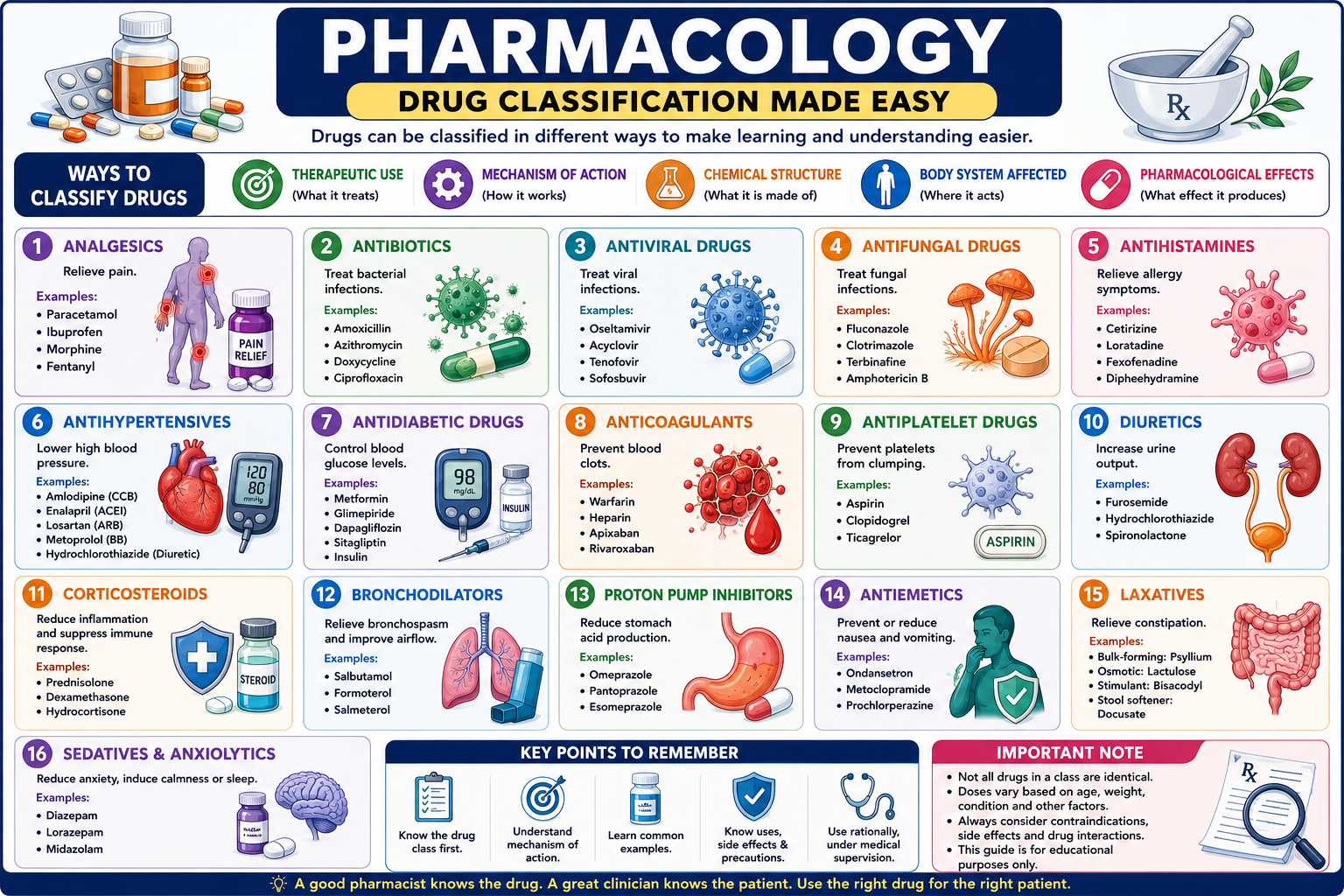
    Pharmacology involves the study of medicines, including how they work, how they are used, and how they affect the human body. One of the easiest ways to understand pharmacology is to learn how drugs are classified into different groups.

    Drug classification helps medical and healthcare students organize medicines according to their therapeutic use, mechanism of action, chemical structure, or effects on the body.

    In this beginner-friendly guide, we will explore common drug classes and understand their basic purpose with examples.

    Important: This article is intended for educational purposes. Medication selection, dosing, and treatment decisions should be made by qualified healthcare professionals.


    What Is Drug Classification?

    Drug classification is the process of grouping medicines according to shared characteristics.

    A drug can belong to more than one classification depending on how it is being categorized.

    For example, a medicine may be classified according to:

    • Therapeutic use
    • Mechanism of action
    • Chemical structure
    • Body system affected
    • Pharmacological effects

    Understanding these classifications makes it easier to study and remember medicines.


    1. Analgesics

    Analgesics are medicines used to relieve pain.

    Common examples include:

    • Paracetamol (acetaminophen)
    • Ibuprofen
    • Naproxen
    • Certain opioid medicines

    Analgesics can be further divided into different groups based on their mechanism and clinical use.

    Non-Opioid Analgesics

    These include medicines such as paracetamol and several NSAIDs.

    Opioid Analgesics

    Opioids are potent pain-relieving medicines that act on opioid receptors.

    Examples include:

    • Morphine
    • Fentanyl
    • Oxycodone

    Because opioids can cause serious adverse effects and dependence, they require careful medical supervision.


    2. Antibiotics

    Antibiotics are medicines used to treat certain bacterial infections.

    Examples include:

    • Amoxicillin
    • Azithromycin
    • Doxycycline
    • Ciprofloxacin
    • Ceftriaxone

    Different antibiotics work against bacteria in different ways.

    For example, some interfere with bacterial cell-wall formation, while others affect bacterial protein or DNA synthesis.

    Important Point

    Antibiotics do not treat viral infections such as the common cold or most cases of influenza.

    Using antibiotics unnecessarily can contribute to antimicrobial resistance.


    3. Antiviral Drugs

    Antiviral medicines are used to treat certain viral infections.

    Examples include antiviral medicines used for:

    • Influenza
    • Herpes infections
    • HIV
    • Hepatitis
    • Certain other viral diseases

    Antiviral medicines work by interfering with specific stages of viral replication.

    The appropriate medicine depends on the particular virus and clinical situation.


    4. Antifungal Drugs

    Antifungal medicines are used to treat fungal infections.

    Examples include:

    • Fluconazole
    • Clotrimazole
    • Terbinafine
    • Amphotericin B

    They may be available as topical, oral, or intravenous treatments depending on the infection.


    5. Antihistamines

    Antihistamines are medicines that reduce the effects of histamine.

    They are commonly used for conditions such as:

    • Allergic rhinitis
    • Itching
    • Hives
    • Certain allergic symptoms

    Examples include:

    • Cetirizine
    • Loratadine
    • Fexofenadine
    • Diphenhydramine

    Some older antihistamines can cause significant drowsiness.


    6. Antihypertensive Drugs

    Antihypertensive medicines are used to manage high blood pressure.

    Common classes include:

    ACE Inhibitors

    Examples:

    • Enalapril
    • Lisinopril

    ARBs

    Examples:

    • Losartan
    • Valsartan

    Calcium Channel Blockers

    Examples:

    • Amlodipine
    • Diltiazem

    Beta Blockers

    Examples:

    • Metoprolol
    • Atenolol

    Diuretics

    Examples:

    • Hydrochlorothiazide
    • Furosemide

    Different medicines may be selected depending on the patient’s condition and other risk factors.


    7. Antidiabetic Drugs

    Antidiabetic medicines help manage blood glucose in people with diabetes.

    Examples of drug classes include:

    • Biguanides
    • Sulfonylureas
    • SGLT2 inhibitors
    • GLP-1 receptor agonists
    • DPP-4 inhibitors
    • Insulin

    Metformin

    Metformin is a commonly used medicine for type 2 diabetes.

    Insulin

    Insulin is essential for people with type 1 diabetes and may also be required in some people with type 2 diabetes.

    Different types of insulin have different onset and duration characteristics.


    8. Anticoagulants

    Anticoagulants reduce the ability of blood to form clots.

    They may be used in conditions such as:

    • Atrial fibrillation
    • Deep vein thrombosis
    • Pulmonary embolism
    • Certain cardiovascular conditions

    Examples include:

    • Warfarin
    • Apixaban
    • Rivaroxaban
    • Heparin

    Anticoagulants can increase the risk of bleeding, so they require appropriate clinical monitoring and management.


    9. Antiplatelet Drugs

    Antiplatelet medicines reduce platelet aggregation and help prevent certain types of blood clots.

    Examples include:

    • Aspirin
    • Clopidogrel
    • Ticagrelor

    They are commonly used in the management and prevention of certain cardiovascular events.

    Antiplatelet therapy should be used according to appropriate clinical guidance.


    10. Diuretics

    Diuretics increase the amount of water and sodium removed from the body through urine.

    They are commonly used in conditions such as:

    • Hypertension
    • Edema
    • Heart failure
    • Certain kidney conditions

    Common classes include:

    • Thiazide diuretics
    • Loop diuretics
    • Potassium-sparing diuretics

    Examples include:

    • Hydrochlorothiazide
    • Furosemide
    • Spironolactone

    11. Corticosteroids

    Corticosteroids are medicines that have anti-inflammatory and immunosuppressive effects.

    Examples include:

    • Prednisolone
    • Dexamethasone
    • Hydrocortisone
    • Methylprednisolone

    They are used in many different medical conditions, including inflammatory and allergic disorders.

    Long-term or inappropriate corticosteroid use can cause significant adverse effects, so these medicines should be used under medical supervision.


    12. Bronchodilators

    Bronchodilators help relax airway muscles and improve airflow.

    They are commonly used in conditions such as asthma and chronic obstructive pulmonary disease (COPD).

    Examples include:

    • Salbutamol
    • Formoterol
    • Salmeterol

    Some bronchodilators are short-acting, while others are long-acting.


    13. Proton Pump Inhibitors

    Proton pump inhibitors (PPIs) reduce stomach acid production.

    Examples include:

    • Omeprazole
    • Pantoprazole
    • Esomeprazole
    • Lansoprazole

    They are commonly used for conditions involving excessive or problematic stomach acid, such as gastroesophageal reflux disease and peptic ulcer disease.


    14. Antiemetics

    Antiemetics are medicines used to prevent or reduce nausea and vomiting.

    Examples include:

    • Ondansetron
    • Metoclopramide
    • Prochlorperazine

    The appropriate antiemetic depends on the cause of nausea or vomiting and the patient’s clinical condition.


    15. Laxatives

    Laxatives are medicines used to help relieve constipation.

    Common categories include:

    • Bulk-forming laxatives
    • Osmotic laxatives
    • Stimulant laxatives
    • Stool-softening agents

    Examples include:

    • Psyllium
    • Lactulose
    • Polyethylene glycol
    • Bisacodyl

    Different types work through different mechanisms.


    16. Sedatives and Anxiolytics

    These medicines may be used to reduce anxiety, promote sedation, or manage certain medical conditions.

    Examples include medicines from the benzodiazepine class, such as:

    • Diazepam
    • Lorazepam
    • Midazolam

    These medicines can cause sedation and other serious effects and should only be used under appropriate medical supervision.


    Simple Way to Remember Drug Classification

    A useful approach for students is to connect each drug class with its primary purpose.

    Drug ClassMain PurposeExample
    AnalgesicsPain reliefParacetamol
    AntibioticsBacterial infectionsAmoxicillin
    AntiviralsCertain viral infectionsOseltamivir
    AntifungalsFungal infectionsFluconazole
    AntihistaminesAllergy symptomsCetirizine
    AntihypertensivesHigh blood pressureAmlodipine
    AntidiabeticsBlood glucose controlMetformin
    AnticoagulantsReduce clot formationApixaban
    AntiplateletsReduce platelet aggregationAspirin
    DiureticsIncrease fluid excretionFurosemide
    CorticosteroidsReduce inflammationPrednisolone
    BronchodilatorsImprove airway airflowSalbutamol
    PPIsReduce stomach acidOmeprazole
    AntiemeticsReduce nausea/vomitingOndansetron
    LaxativesRelieve constipationLactulose

    How Medical Students Can Study Drug Classes

    Instead of memorizing hundreds of individual medicines, start by learning the drug class.

    For each class, learn:

    1. Drug Class

    For example:

    ACE inhibitors

    2. Mechanism

    Understand generally how the class works.

    3. Common Examples

    Learn a few representative medicines.

    4. Main Uses

    Know the major conditions in which the class is used.

    5. Important Adverse Effects

    Learn the clinically important side effects.

    6. Important Contraindications and Precautions

    Understand when a medicine may not be appropriate.

    7. Monitoring

    Learn what clinical or laboratory monitoring may be required.

    This approach makes pharmacology more organized and easier to revise.


    Drug Classification by Body System

    Another useful method is to organize medicines according to the body system they primarily affect.

    Cardiovascular System

    • Antihypertensives
    • Antiarrhythmics
    • Anticoagulants
    • Antiplatelets
    • Diuretics

    Respiratory System

    • Bronchodilators
    • Corticosteroids
    • Certain antihistamines

    Digestive System

    • PPIs
    • Antiemetics
    • Laxatives
    • Antidiarrheal medicines

    Nervous System

    • Analgesics
    • Antidepressants
    • Antiepileptic medicines
    • Anxiolytics

    Endocrine System

    • Antidiabetic medicines
    • Thyroid medicines
    • Corticosteroids

    This system-based approach can help students connect pharmacology with anatomy, physiology, and clinical medicine.


    Important Safety Considerations

    Medicines can have significant effects on the body.

    Before using or prescribing a medicine, healthcare professionals may need to consider:

    • Patient age
    • Allergies
    • Pregnancy status
    • Kidney function
    • Liver function
    • Existing medical conditions
    • Current medications
    • Drug interactions
    • Appropriate dosage
    • Duration of treatment

    Never use this classification guide as a substitute for a prescription or professional medical advice.


    Conclusion

    Drug classification is one of the most effective ways to make pharmacology easier to understand.

    Instead of trying to memorize every medicine individually, students can organize medicines into groups such as analgesics, antibiotics, antivirals, antihypertensives, antidiabetics, anticoagulants, corticosteroids, bronchodilators, and many others.

    For each class, focus on its mechanism, common examples, therapeutic uses, important adverse effects, precautions, and monitoring requirements.

    Once these foundations are clear, learning individual medicines becomes much easier.

    Understand the drug class first — then learn the individual medicines within that class.